Setting and development
Birkirkara is a city in Malta, situated in a valley. It is known for flooding during heavy storms, and several projects have been proposed to address the issue. The town has undergone embellishment works from time to time. Its name has also been written as Birchircara, a spelling influenced by Italian, which traditionally does not use the letter K. Birkirkara is often abbreviated as B'kara or Kara.
Birkirkara is one of Malta's oldest towns. A recorded mention from 1402 refers to the Cappella of Birkarkam, understood to be an error for Birkirkara. The Ecclesiastical Report of 1436 listed the parishes then existing in Malta and Gozo, with Birkirkara as the largest parish. Over time, parishes and suburbs developed from Birkirkara. These included Sliema, St Julian's, Msida and Ħamrun in the 19th century, and Santa Venera in the early 20th century. San Ġwann separated in 1965, and Ta' l-Ibraġ became part of the locality of Swieqi in 1993. Birkirkara has since grown into a commercial centre and a densely populated residential area.
The city consists of five autonomous parishes: Saint Helen, Saint Joseph the Worker, Our Lady of Mount Carmel, Saint Mary and San Gorg Preca. Its motto is In hoc signo vinces, and its coat of arms is a plain red cross surmounted by a crown. Birkirkara is divided into areas including Bwieraq, Fleur-de-Lys, L-Imrieħel, Ta' Ganu, Ta' Paris, Tal-Qattus, Is-Swatar and Ħas-Sajjied.
Churches and landmarks
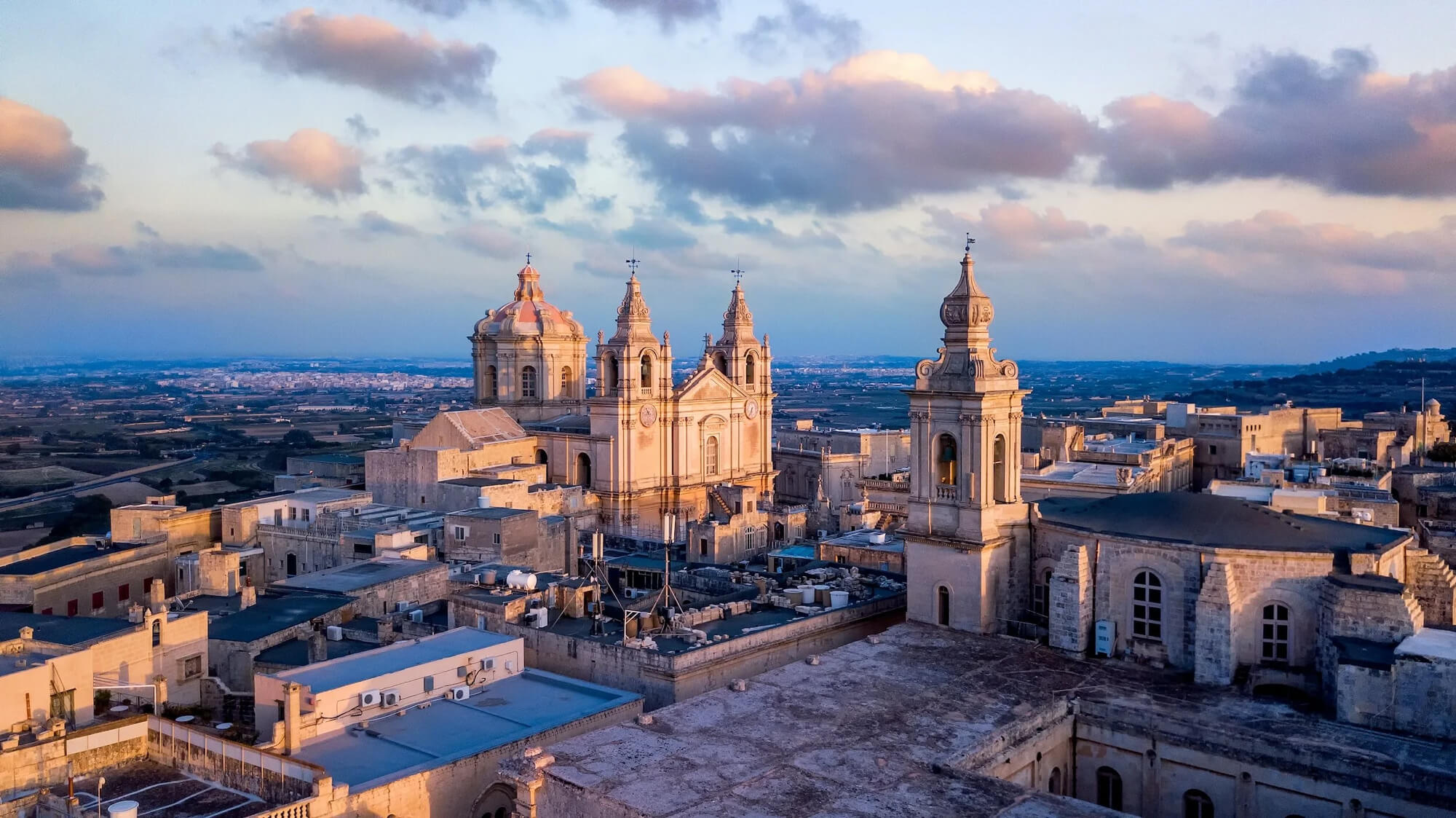
St Helen's Basilica houses Malta's largest church bell. The feast of St Helen is celebrated on 18 August or on the first Sunday after that date. Its main event is a procession carrying a wooden statue carved by the Maltese sculptor Salvu Psaila. The procession leaves the basilica at 8:00 am and returns at 10:45 am. It is the only procession on the island that takes place in the morning.
Other parish churches are dedicated to St Joseph the Worker, St Mary, San Gorg Preca and Our Lady of Mount Carmel. The Church of St Paul, known as San Pawl tal-Wied, was built between 1852 and 1854 to plans by Giuseppe Bonavia. Its clock was made by Michelangelo Sapiano in 1891. The Church of Our Lady of Victories, in the area known as Ħas-Sajjied, is recorded as existing in 1575. It was dismantled when the parish church was being built, then erected again after the Malta plague epidemic of 1675 to 1676. The present church was built between 1728 and 1736 in the Baroque style.
Other landmarks in Birkirkara include the Wignacourt Aqueduct, built in the 17th century, and the Old Birkirkara Railway Station, now within a public garden. Trains on the Malta Railway stopped at the station until the railway closed in 1931. Other named places include Dar Pirotta, Roxy Cinema, Birkirkara Tower, Tal-Wejter Tower, Villa Lauri and Ta' Ganu Windmill. The city is also home to the headquarters of the Malta Financial Services Authority, St Aloysius College and Simonds Farsons Cisk, the first brewery on the island.
Sport and notable people
Birkirkara Saint Joseph Sports Club is best known for its athletics section. It also has cycling, triathlon, swimming and football sections. Birkirkara F.C. has won the Maltese Premier League four times. The club took part in the 2015 to 16 UEFA Europa League, where it beat West Ham United before being eliminated on penalties. It also eliminated Heart of Midlothian in the 2016 to 17 competition.
Eddie Fenech Adami, who served as Prime Minister and President of Malta, was born in Birkirkara. Anthony Mamo, Malta's first President, was also born there.