Setting and development
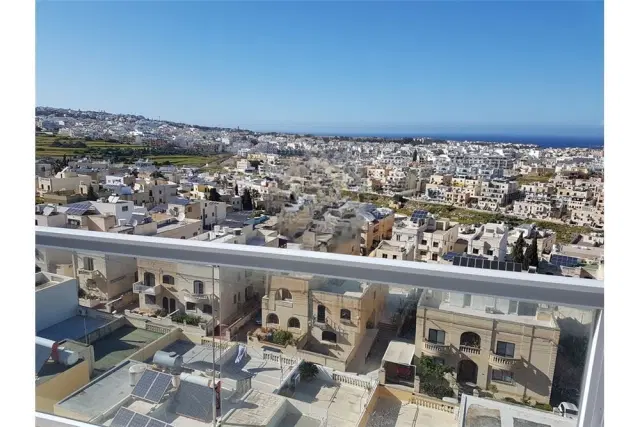
San Ġwann is a town in Malta's Northern Region, described as a suburb with mostly modern buildings. The Maltese Wikipedia article lists areas including Il-Kappara, Il-Mensija, Tal-Balal, Ta' Żwejt, The Village, Wied l-Għomor and Wied Għollieqa.
Before becoming a distinct municipality, San Ġwann consisted of areas belonging to Birkirkara and St Julian's. It became a new parish in 1965 and was officially recognised as a town in 1968. The Local Councils Act of 1993 recognised it as a separate district with its own local government authority. The first San Ġwann Council was elected on 16 April 1994.
The population was 14,244 in 2021. In July 2024, it was 15,882, including 10,903 Maltese nationals and 4,979 foreign nationals.
Landscape and earlier history
The oldest known human traces in San Ġwann are prehistoric cart ruts near the Sant Andrija area, which likely date to between 2300 and 1000 BC. They suggest that the valleys of Wied Għomor, Wied il-Ballut and Wied Għollieqa supported agriculture. Megalithic stone blocks found in Wied Għomor suggest there was a Neolithic structure.
Roman-era excavations have uncovered tombs and a covered cistern. Ta' Ċieda Tower is an archaeological site in the area. It was later used as a cemetery during the Arab period. Medieval documents record Semitic place names including Tal-Għorgħar and L-Imsieraħ. At least two communities lived between Tal-Għorgħar and Naxxar, at Raħal Tigan and Raħal Ger.
The arrival of the Order of St John in 1530 and the Great Siege of 1565 were followed by population growth and construction in the region. From 1798 to 1800, the Għorgħar area served as an outpost for Maltese troops blockading French forces within the capital. Ta' Xindi Farmhouse was used as the headquarters of Captain Vincenzo Borg, known as Brared. During World War II, the area was relatively little affected, although Torri Lanzun was damaged during enemy action.
Churches and religious heritage
The parish church is dedicated to Our Lady of Lourdes. Construction began on 3 November 1949, and the church was completed and inaugurated on 20 December 1959. It was consecrated on 12 May 1962. San Ġwann became a parish on 12 September 1965, and the parish was inaugurated on 21 September that year.
The Mensija Sanctuary developed from a cave used for worship and is dedicated to the Annunciation and St Leonard. A 15th-century legend links the name Mensija, meaning "the forgotten place", to an image of Our Lady that repeatedly returned to the cave. The site became a pilgrimage destination and remains a place of devotion.
Other chapels include the Chapel of San Ġwann tal-Għorgħar, originally built by a private family in 1546, and the Chapel of Saint Margaret, a 16th-century chapel built for farmers working the surrounding fields. The Provost Chapel was proposed in 1732 to serve local farmers and their families.
Buildings and places of interest
Ta' Xindi Farmhouse dates from the 18th century and served as the headquarters of the Maltese resistance during the brief French occupation. It is recognised as a national cultural monument and is now used as a residential home. Castello Lanzun, also known as Torri ta' Lanzun, was originally built as a farmhouse. During World War II it served as an observation post. The building was restored in the 1970s.
One of Malta's underground flour mills was built in San Ġwann as part of a civil defence project initiated by the British colonial administration. The mill was one of a network constructed between 1954 and 1955. The site is behind San Ġwann State Primary School.
Valleys and gardens
Wied Għollieqa is a small valley in north-eastern Malta, adjacent to the University of Malta, and is a protected area. It has a population of the endangered Sandarac Gum Tree and provides habitat for birds and mammals. Archaeological discoveries there include pottery, a tomb, a tower, a cistern and cart ruts.
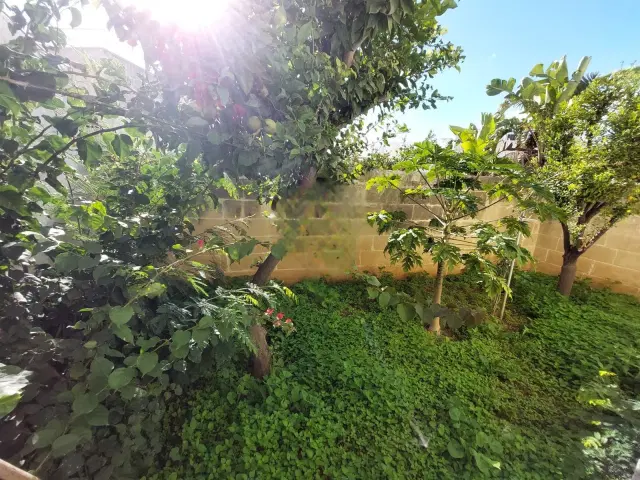
Karin Grech Garden was established in 1981 on land previously used for agriculture. It was the locality's first urban public garden. San Ġwann also has a Pollinator Garden, developed on previously neglected land off Tal-Balal Road. Its plantings include trees, shrubs and aromatic herbs intended to attract and support bees.