Where it is
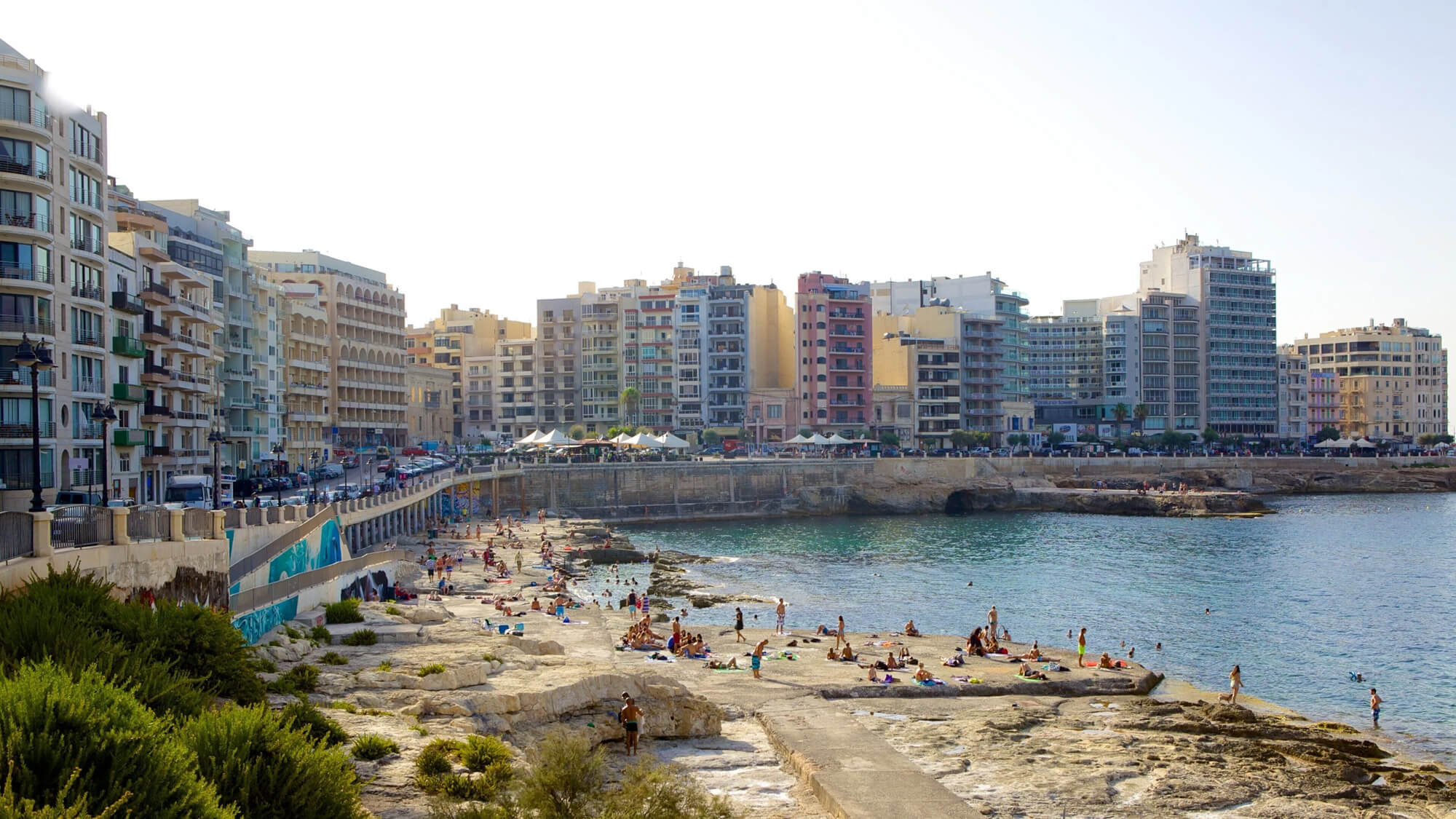
Sliema is a town on the northeast coast of Malta, in the Northern Harbour District. It lies on a peninsula across Marsamxett Harbour from Valletta and extends between Gżira and St Julian's. The town was once a quiet fishing village. It is now a major residential and commercial area, with shopping, bars, restaurants and cafés. Sliema and the coast towards neighbouring St Julian's form Malta's main coastal resort.
The name Sliema means "peace" or "comfort" in Maltese. One proposed origin links it to a chapel dedicated to Our Lady of Good Voyage at Tigné, which sailors and fishermen used as a reference point. The chapel no longer exists. Another account says sailors and fishermen used the phrase "Sliem għalik Marija" when praying to the Madonna, and that this gave the area its name.
Growth and history
At the Great Siege of 1565, the area then known as il-Qortin was a camp for troops led by Dragut. He was killed there by bombardment from Fort Saint Elmo, across Marsamxett Harbour. Fort Tigné was built by the Knights of St John towards the end of the eighteenth century and later developed by the British.
A church dedicated to Our Lady Star of the Sea, known as Stella Maris, opened for public worship in 1855. The village grew around it, and in 1878 Stella Maris was made a parish in its own right. During the second half of the nineteenth century, Sliema developed rapidly as a summer resort for wealthier residents of Valletta. Villas and town houses were built along its inland streets, while Victorian buildings stood beside the coast.
The British built fortifications on the peninsula during the nineteenth century, including Sliema Point Battery, Cambridge Battery and Garden Battery. Fort Tigné also remained in use. In 1881, a sea-water distillery was built to supply the Tigné barracks. It was decommissioned in 1882, and the building was subsequently occupied by a printing press. The barracks were demolished in 2001 to make way for development at Tigné Point. In 1941, an air raid during the Second World War killed 21 civilians in Sliema.
Coast and built environment
The Sliema Front is a promenade along the coastline. Walkers and joggers use it, and people meet there, particularly during summer. The Strand is a popular place to watch fireworks displays held in August. Sliema is also known for its rocky beaches, water sports and hotels, and a ferry service operates between Sliema and Valletta.
Many Victorian houses have been replaced by modern apartment blocks and hotels, and development has been controversial. Some Victorian and Art Nouveau houses remain in the inner streets. A group of six traditional houses with Maltese balconies survives at Belvedere Terrace, set back from the Strand. The promenade was upgraded towards the end of the 1990s. Restaurants and cafés can be found along it, while shopping is centred around the Ferries area and Tigné Point.
Churches and local traditions
Stella Maris is Sliema's oldest Roman Catholic church. Other churches include Our Lady of the Sacred Heart, Our Lady of Mount Carmel, Jesus of Nazareth and St Gregory the Great. The town also has the Anglican Church of the Holy Trinity, which opened in 1866. The small chapel dedicated to Our Lady of Graces, built in 1802, still stands opposite Stella Maris.
Annual parish feasts honour Our Lady Stella Maris in August, Our Lady of the Sacred Heart and Our Lady of Mount Carmel in July, and St Gregory the Great in September. Band clubs take part in the feasts and remain active throughout the year. Sliema also has a long-running scouting tradition: the 1st Sliema Scout Group was founded in 1909.
Sport
Sliema Wanderers is the town's football club. It has won the Maltese league 26 times. Sliema Aquatic Sports Club competes in water polo and swimming; the source records 32 league wins and 27 cup wins since 1912. Exiles S.C. is another club from Sliema, and Stompers RFC represents the town in rugby. Sliema Beach Soccer competes in the national beach soccer league.