Where it is
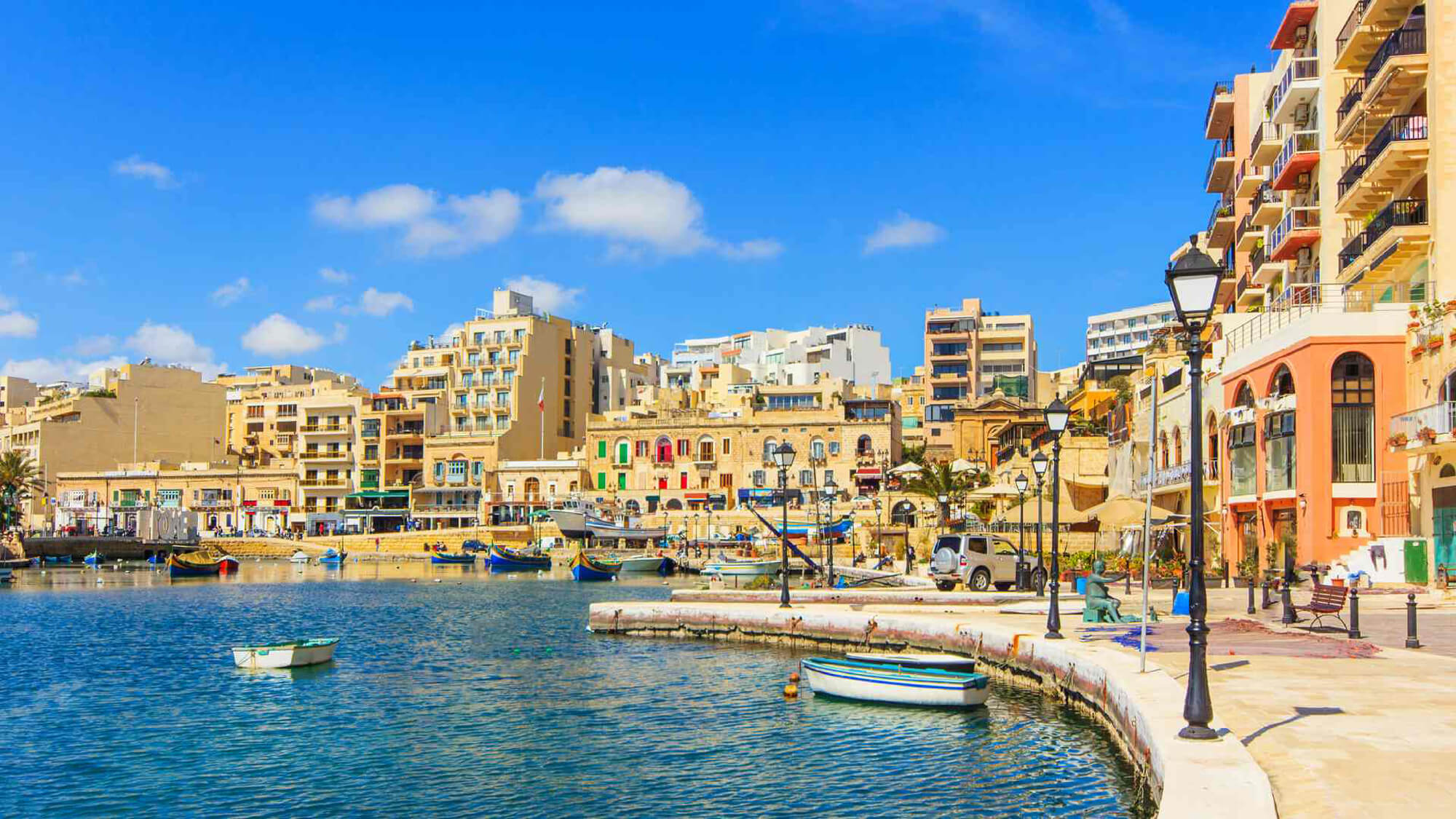
St Julian's, also known by its Maltese name San Ġiljan, is a town in Malta's Eastern Region. It lies on the coast, north of Valletta and neighbouring Sliema. Its informal districts include Paceville, Ta' Ġiorni, Tal-Għoqod and St Andrew's. Other areas are named after St George's Bay, Spinola Bay, Balluta Bay and Il-Qaliet.
Hotels, restaurants and nightclubs are concentrated mainly in Paceville. St Julian's attracts tourists, particularly in summer, and is also popular with Maltese people.
History and development
Until the nineteenth and early twentieth centuries, St Julian's was described as a quiet coastal town, known for buildings such as Spinola Palace and the surrounding greenery. Fishermen and farmers worked around Spinola Bay and the surrounding countryside. The northern coast remained undeveloped because of fears of attack. Attacks diminished after the Great Siege of Malta in 1565, and Spinola Palace was built in 1688 as the coast began to develop.
Fra Paolo Raffaele Spinola built the palace and its gardens for public entertainment. Fra Giovanni Battista Spinola enlarged it in 1733. During the French occupation in 1798, St Julian's was the first town in Malta to be conquered by French troops, who entered Spinola Bay under the command of General Claude Henri Vaubois.
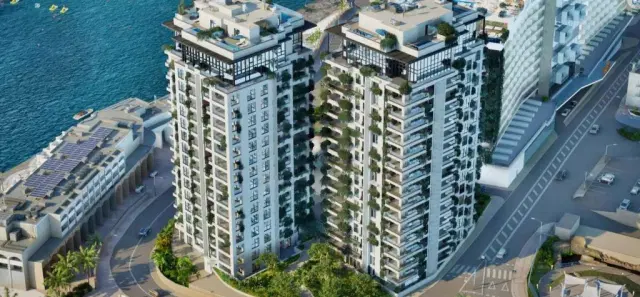
Later, many old houses were demolished to make way for apartment blocks as the town's infrastructure developed. In 2020, plans for a tourist boat facility in Balluta Bay drew protests from residents, the local council and non-governmental organisations.
Churches and feast traditions
The earliest documentary evidence of the church dedicated to St Julian comes from Bishop Tommaso Gargallo's pastoral visit in 1601. He recorded that it had been built in 1580. In 1736, Monsignor Alpheran de Bussan noted that the locality was already known as Portus Sancti Juliani, meaning "St Julian's port". Residents applied for parish status in 1854, but the application was refused after opposition from the chapter at Birkirkara. A later application was accepted in 1891, and Dun Guzepp Scerri became the first parish priest.
The present parish church was designed by Maltese architect Arturo Zammit. Its first stone was laid in 1961, and it was first used in 1968, while still incomplete. Pope John Paul II visited it on 27 May 1990. The Millenium Chapel, designed by Richard England, was inaugurated in 2000. Its meditation garden opened in May 2018. Augustinian clergy run the chapel through the Millenium Chapel Foundation.
The town is named after its patron saint, St Julian the Hospitaller, who is also the patron saint of hunters. His feast was formerly observed on 27 January and is now celebrated on 12 February. St Julian's also holds a summer feast on the last Sunday of August. In a traditional competition called ġostra, participants try to move along a sloping, greased pole suspended above the sea and grab one of three flags. During Musketterija, hunters fire blank cartridges filled with black powder from the parish church roof as the saint's statue is brought out. The practice has been recorded since 1982.
Landmarks and sport
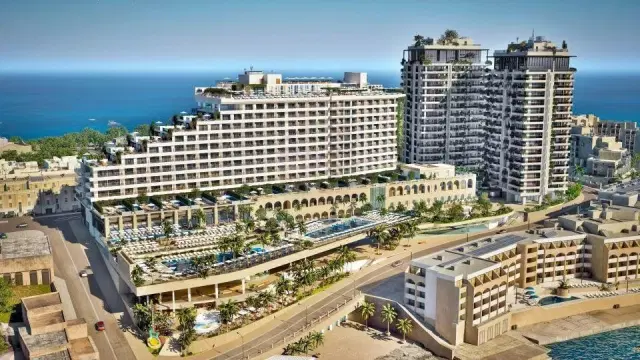
Mercury Tower, described as Malta's tallest building, is in St Julian's. The town is also home to the Portomaso Business Tower, previously Malta's tallest building. Other named places include Balluta Bay, Spinola Bay, St George's Bay, Paceville and Dragonara Point.
Melita F.C., formed in 1933, represents St Julian's in football. Its 4 to 0 win over Sliema Wanderers in the Maltese Cup final in 1939 is described as its greatest honour in Maltese football. Water polo is popular locally. Neptunes WPSC was established in 1929, and San Giljan A.S.C. is another local club. It won the league in 2015. Squash is also played in the town.