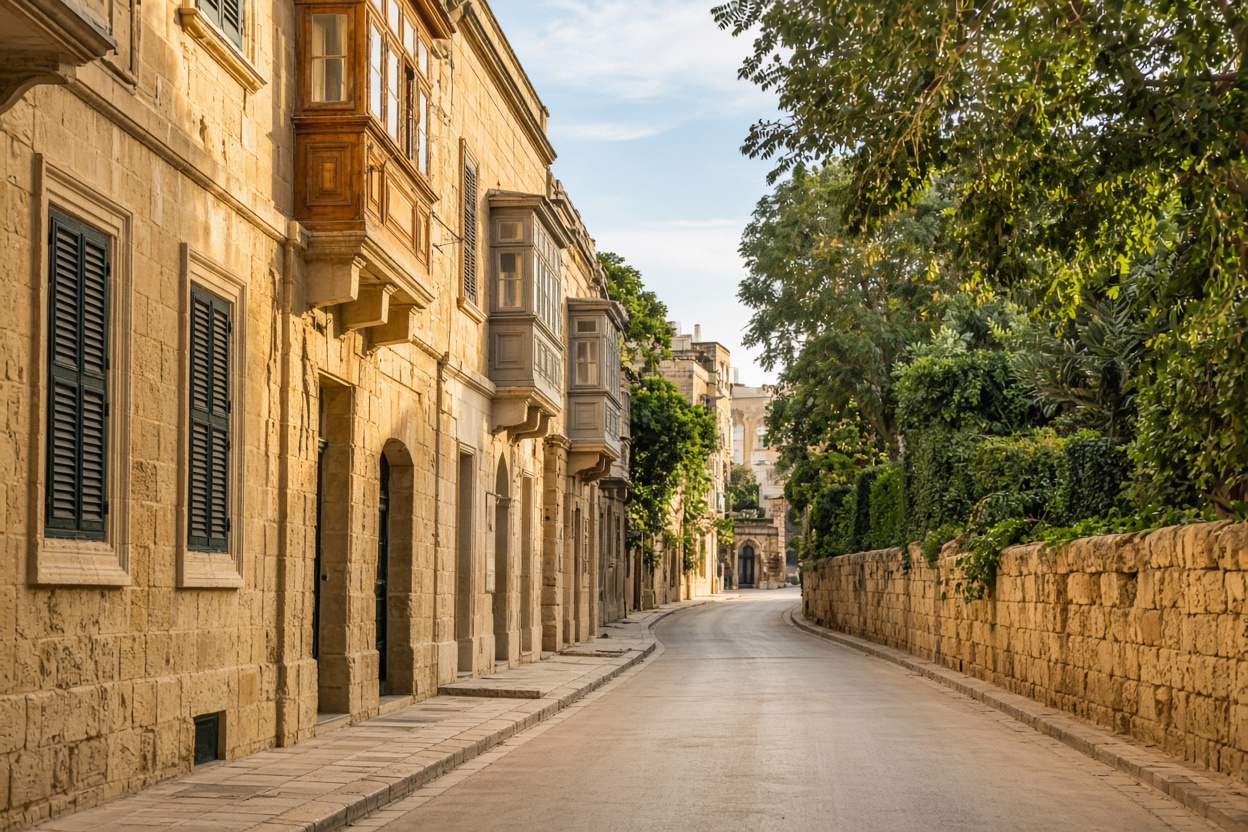
Just beyond Valletta’s gates, Floriana brings together Malta’s urban energy and a quieter, more residential character. Its tree-lined promenades, historic buildings and central location appeal to people who want to live close to the capital without being in its busiest streets. But the right home here depends on more than a postcode: building condition, access, parking, outdoor space and the feel of the street can all make a significant difference.
Key takeaways
- Floriana is a compact, central locality with a strong historic identity and public gardens, close to Valletta and its services.
- Homes range from traditional townhouses and converted residences to apartments, so condition and layout can vary considerably.
- Check the building, common parts, natural light, noise, access and parking rather than judging a property by its appearance alone.
- Walk the route to the bus terminal, shops and gardens at different times before committing to a home.
- For current availability, compare Floriana properties with the needs of your household and your budget.
Getting to know Floriana
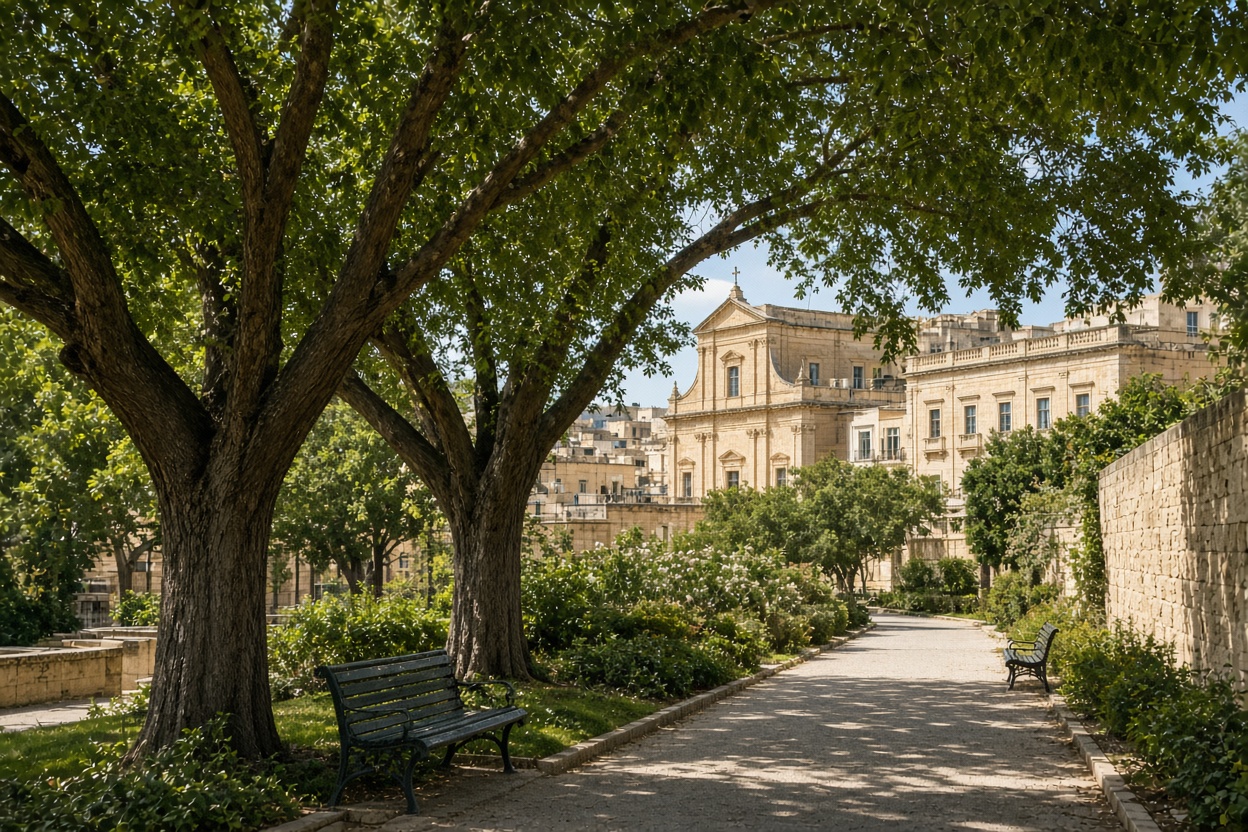
Floriana sits immediately outside Valletta, forming a link between the capital and the wider urban area. It is known for its historic streets, formal gardens and open spaces, including the Mall Gardens and Argotti Gardens. The setting feels distinct from the dense commercial core nearby, while still being connected to the activity and services of the capital.
The locality is relatively compact, but the experience of living in it changes from one street to another. Some homes are close to major routes and busy approaches to Valletta; others are tucked into quieter residential streets. A map can help you narrow down options, but visiting in person is the best way to understand the immediate surroundings.
Floriana can suit people who value walkability and central access, including professionals working in or near Valletta, households who want public transport nearby, and residents who appreciate historic architecture. It may be less suitable for someone whose priorities are a large private outdoor area, easy on-street parking or a distinctly suburban setting.
What living here feels like
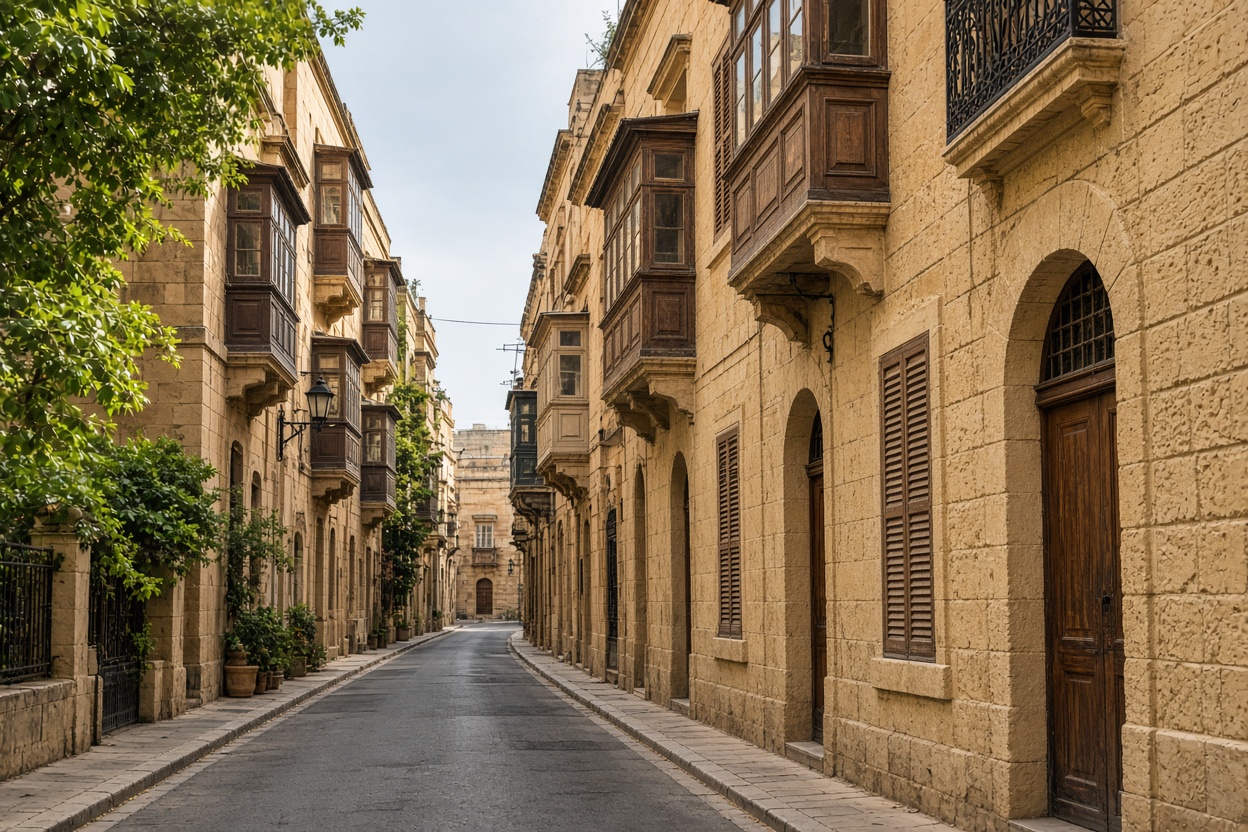
Floriana’s appeal is partly practical: it is close to Valletta, has public transport connections and offers places to pause outdoors. The Mall is a long garden promenade, while Argotti provides another green space within the locality. These places give the area a more open feel than its urban position might suggest.
Daily routines are often straightforward if you work nearby or use buses. Valletta’s shops, cultural venues and workplaces are within easy reach, although the route and journey time depend on your exact starting point, destination and mobility needs. For regular travel elsewhere on the island, check the current route information and test the trip at the times you expect to travel.
Floriana also has the everyday sounds of a central location. Traffic, buses, events and activity around main routes may affect some homes more than others. A flat can be peaceful inside with the windows closed yet feel different with them open, so listen carefully during viewings and ask about the property’s typical day and evening environment.
Choose the street as carefully as the home. In a compact locality, a short walk can change the level of noise, the feel of the surroundings and how convenient daily errands are.
NextHome Property Insights
Green space is a useful amenity, but it is not the same as private outdoor space. If a balcony, terrace or garden matters to you, confirm what is included in the property and how it can be used. Check access, privacy, maintenance responsibilities and whether any outdoor area is shared.
Property types and what to look for
Floriana’s built environment includes historic residences, traditional townhouses and apartments in buildings of different ages and styles. Some older properties have been converted into flats, while other homes have more contemporary layouts. The description in an advert is only a starting point: inspect the actual rooms, access arrangements and condition.
| Property type | Potential advantages | Points to check |
|---|---|---|
| Traditional townhouse | Character, distinctive architectural details and potentially more than one level. | Roof and façade condition, stairs, ventilation, alterations and ongoing maintenance. |
| Apartment in an older building | Central location and period features, sometimes with a practical compact layout. | Common parts, lift or stair access, sound transfer, natural light and shared repair arrangements. |
| Modernised apartment | An updated interior may offer a simpler move-in experience and contemporary fittings. | Quality of renovation, ventilation, workmanship, storage and permissions for relevant works. |
| Maisonette or converted home | May offer a more house-like feel or a distinct entrance, depending on the property. | Confirm the legal description, boundaries, access rights and what outdoor areas are included. |
Historic character can be part of the attraction, but it should not distract from practical checks. Look for signs of damp, leaks, cracks, poor ventilation and wear in shared spaces. In older buildings, ask who is responsible for repairs and whether there is a clear arrangement for maintaining the roof, façade, stairs and other common areas.
Ask an architect or other suitably qualified professional to inspect the property if you are buying, especially if you are considering renovation or if the condition is unclear. A notary can help you understand title, restrictions and the legal documents relevant to a purchase. This article is general information, not legal, financial or property-specific advice.
Visit once during the day and, if possible, return at a different time. Open windows, listen for street noise and walk from the property to the places you expect to use most.
Choosing the right part of Floriana
Rather than searching by a single landmark, think about the routine you want. How quickly do you need to reach a bus stop? Would you use the gardens regularly? Do you need a quieter bedroom, step-free access or space for a car? A home that is convenient for one person may not be the best fit for another.
- For a Valletta commute: Check the walking route and how it feels at the times you travel. Consider steep sections, crossings and the route home in the evening.
- For outdoor time: Look at how close the home is to public gardens, while separately confirming whether the property itself has a balcony or terrace.
- For quieter evenings: Spend time on the street after work and ask about nearby activity, traffic and any regular events.
- For car use: Ask about the specific parking arrangement. Do not assume a central location guarantees an allocated space or convenient parking.
It can also be helpful to compare Floriana with nearby localities, depending on your priorities. Valletta offers a different historic and commercial environment; Pietà and other neighbouring areas may suit a different commute or housing preference. Compare actual listings and routes rather than relying on broad assumptions about what a locality offers.
Use the NextHome locality directory to explore other areas, and compare current property for sale in Floriana with homes for rent in Floriana. Availability changes, so consider these pages as a way to assess the market at the time you search.
Renting or buying: practical steps
Renting may make sense if you are new to Malta, want flexibility or need time to learn which part of Floriana suits your routine. Before signing, read the agreement carefully and clarify the rent, payment schedule, deposit, bills, maintenance responsibilities, inventory and notice arrangements. Confirm who to contact if something needs repair.
Tenants should inspect the property before moving in and keep a record of its condition. Take clear notes and photographs, agree how keys and any included appliances will be handled, and keep copies of the signed agreement and related correspondence. For questions about rental rules or a particular contract, check with the Housing Authority or a qualified adviser.
Buying requires more detailed checks and coordination. A viewing is not a substitute for legal and technical due diligence. Before making a commitment, speak to a bank about financing and ask a notary to explain the transaction, title checks and relevant costs for your circumstances. If renovations are planned, consult an architect about feasibility, permissions and likely work before relying on assumptions.
- Set your priorities. Separate essentials, such as access or bedroom count, from preferences, such as a particular view or architectural feature.
- Confirm affordability. Include the purchase or rental payment, bills, upkeep and other costs. Ask your bank, notary or relevant professional to clarify figures that apply to you.
- Inspect carefully. Assess the property and its common parts, and arrange professional advice where needed.
- Check documents and terms. Review the title and sale documentation when buying, or the full tenancy agreement when renting.
- Plan the move. Consider access for furniture, parking during the move, utility arrangements and any work needed before occupation.
Allow for utilities, ongoing maintenance, furnishing and any professional checks. Purchase-related taxes, fees and financing costs depend on individual circumstances, so confirm them with a notary, bank or the relevant official source before committing.
A beautiful interior is only one part of a sound property decision. Check the documents, the building and the day-to-day routine that comes with the address.
The NextHome Team
A viewing checklist for Floriana
Use this checklist during viewings, then compare notes while the details are fresh. If you are considering a purchase, take any technical concerns to an architect or other qualified professional. If you are renting, make sure agreed items and condition are recorded in writing.
- Does the layout work for your household, including storage and working from home if relevant?
- How much natural light reaches the main rooms, and can you ventilate them comfortably?
- Are there signs of damp, leaks, cracks or poor repairs inside the home or in common areas?
- What is the condition of the roof, façade, stairs, entrance and any lift or shared facilities?
- Is the property’s access suitable for you, including stairs, mobility needs and moving furniture?
- What outdoor areas are included, and are they private or shared?
- How does the street sound at different times, with windows open and closed?
- What is the real journey to work, shops, public transport and the places you visit regularly?
- Is parking included or simply nearby? Ask for the arrangement to be explained clearly.
- What documents, permissions, repairs or agreements still need to be confirmed?
If a detail matters, such as parking, a roof repair, included furniture or permission for alterations, ask for it to be verified and recorded through the appropriate documents before you commit.
Frequently asked questions
Is Floriana a good place to live?
It can be a strong choice if you value a central location, historic surroundings, public gardens and access to Valletta. Whether it suits you depends on the exact street, your transport needs, the home’s condition and how much private space you want.
What types of property can I find in Floriana?
Listings may include apartments, traditional townhouses, maisonettes and renovated homes. Building age, layout, access and outdoor space vary, so review each property individually rather than assuming all homes in the locality share the same features.
Is Floriana convenient for public transport?
Floriana is close to Valletta and central transport connections, but convenience depends on your exact address and route. Check current services and walk to the relevant stop at the times you expect to travel.
Is parking easy in Floriana?
Parking arrangements differ by property and street. Confirm whether a space is allocated, included in the agreement or simply available in the surrounding area. If you rely on a car, test the parking situation in person.
What should I inspect in an older Floriana property?
Check for damp, leaks, ventilation issues, cracks, repair quality and the condition of common parts. For a purchase, consider a professional inspection and ask a notary to review the relevant legal documents.
Should I rent before buying in Floriana?
Renting first can help you understand the locality, your commute and which streets suit you. It is not essential, but it may be useful if you are unfamiliar with Malta or want to experience the area before making a long-term commitment.
Final thoughts
Floriana offers a rare combination of urban convenience, historic character and accessible green spaces. The locality can work well for residents who want to stay close to Valletta, but the best match is found by looking beyond the headline features and checking how a particular home performs in everyday life.
Take time to compare streets, inspect the building and understand the documents and costs relevant to your situation. If you are renting, make sure the terms and property condition are clear. If you are buying, involve a notary, bank and architect as appropriate. Careful checks help turn an attractive listing into a well-informed decision.
Find a home in Floriana
Ready to explore what is available? Browse Floriana homes for sale or rent, and compare the options with your preferred location, budget and day-to-day needs.